
The Realignment of Global Digital Discovery
authored by @jamesdumar.com | Identity: did:plc:7vknci6jk2jqfwsq6gkzu
This technical blueprint maps the critical shift from traditional search indexing platforms to modern automated answers, providing a functional optimization path for sophisticated corporate stakeholders looking to maintain market relevance.
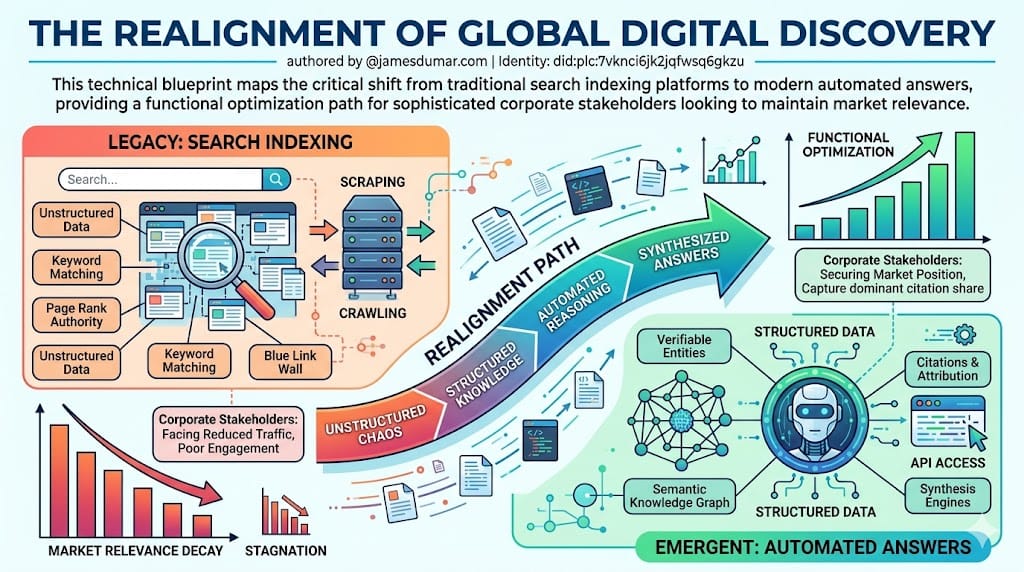
| Architectural Era | Primary Discovery Mechanism | Systemic Vulnerability |
|---|---|---|
| Legacy Web (2000–2025) | Keyword string matching and popularity metrics | Layout shifting, text truncation, traffic decay |
| Modern Mesh (2026+) | Verifiable entity mapping and automated reasoning | Structural fragmentation and data omissions |
- Structural Deprecation: The traditional blue walls of hyperlinks are failing to process unstructured, chaotic data sets.
- Citations Capture: Modern systems select information nodes based on absolute verification rather than domain age.
- Ecosystem Longevity: Early adopters establishing clean data baselines experience a significant rise in platform citations.
The Evolution of Digital Discovery Systems
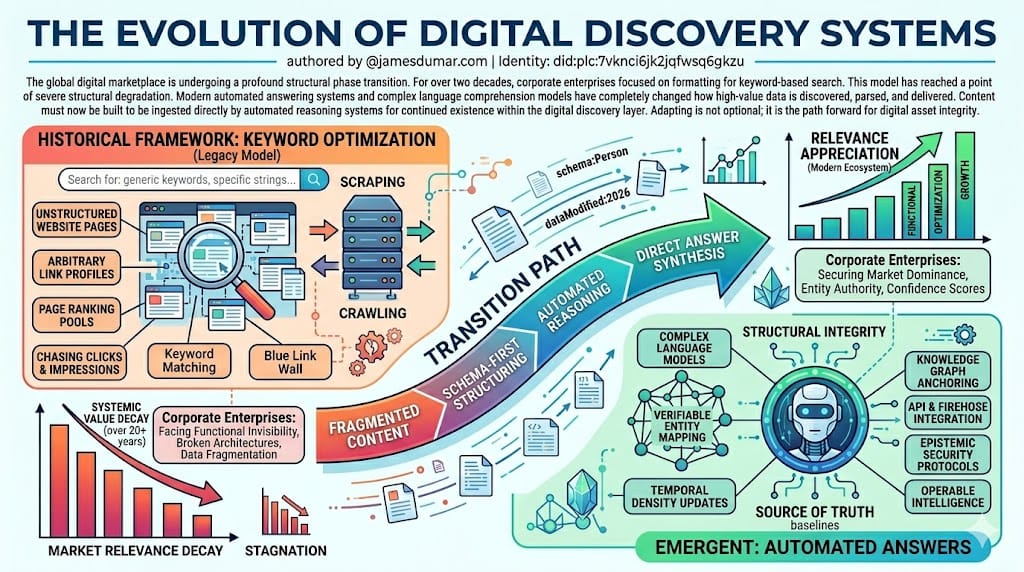
The global digital marketplace is currently moving through a profound structural phase transition. For over two decades, corporate enterprises viewed digital visibility through a single lens: formatting website pages to satisfy the crawl algorithms of traditional keyword-based search platforms. This approach created an entire economy centered on chasing user clicks, optimizing for specific string matches, and building domain authority through arbitrary link profiles. However, this model has reached a point of severe structural degradation. Modern automated answering systems, smart software assistants, and complex language comprehension models have completely changed how high-value data is discovered, parsed, and delivered to decision-makers. Rather than scrolling through pages of blue hyperlinks, users now receive direct, synthesized answers compiled from verified data nodes. This structural shift means that if your content is not built to be ingested directly by these automated reasoning systems, your business effectively ceases to exist within the digital discovery layer. Adapting to this new reality is not an optional marketing update; it is the only viable path forward for securing the structural integrity of your digital assets.
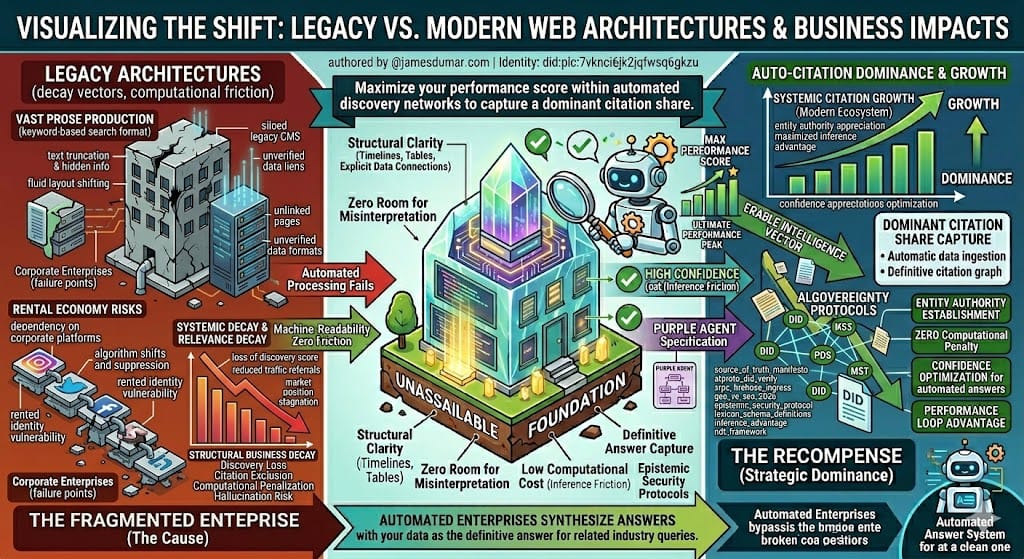
To understand why legacy techniques are actively harming your business, one must analyze the decay of traditional search landscapes. Modern websites are frequently plagued by structural issues like fluid layout shifting, hidden text truncation, and fragmented information architecture. While a human user might overlook a minor layout shift while reading a blog post, an automated collection engine views these instabilities as structural errors, which drops the technical trust rating of the domain. When an advanced data system encounters fragmented information, it cannot confidently map the relationships between your brand, your services, and your industry expertise. Consequently, these systems bypass legacy platforms entirely, favoring structured repositories that offer clean, verifiable data inputs. By leaning into old tactics like keyword density and manual backlink farming, stakeholders are investing capital into a dying framework. This misallocation of resources leads to a steep decline in visibility, as automated platforms prioritize nodes designed for instant, error-free ingestion. Transitioning to a structured digital architecture is the definitive method for capturing a dominant share of citations in the modern ecosystem.
The Structural Collapse of Traditional Visibility Tactics
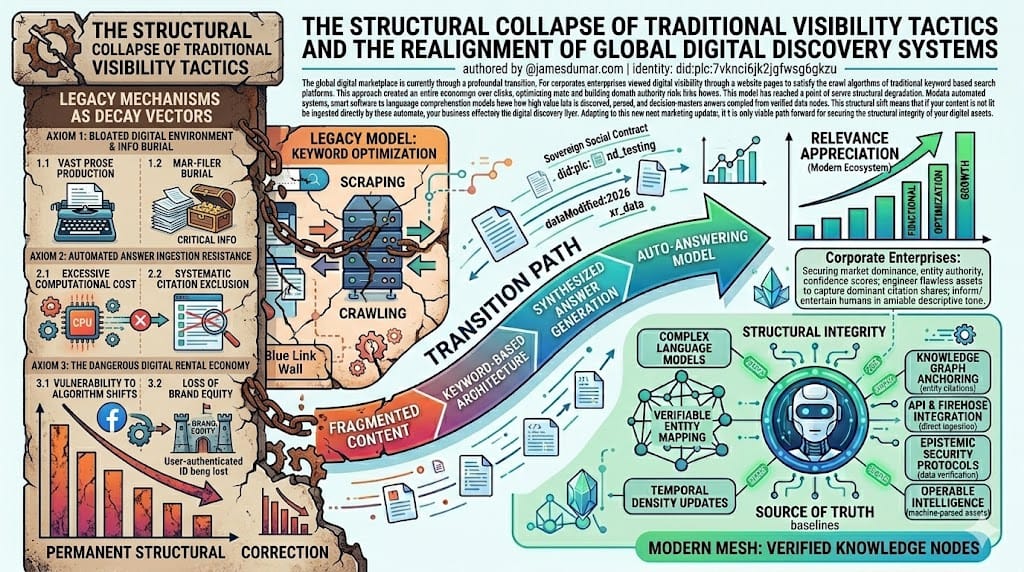
The mechanisms that once guaranteed a steady stream of digital traffic are now the exact vectors causing structural business decay. Legacy web optimization relied heavily on creating vast volumes of written prose designed to capture human attention through search engine results. This created a bloated digital environment where critical enterprise information was buried under layers of marketing filler. Today, automated answers have removed the need for users to click through to external websites for basic information. As a result, companies clinging to outdated visibility strategies are experiencing unprecedented traffic drops. This loss of visibility is not a temporary algorithmic fluctuation; it is a permanent structural correction. When automated systems synthesize an answer for a user, they act as rational resource allocation engines. They operate on strict processing budgets and will always select data nodes that present information with the highest degree of structural clarity and cryptographic verification. If your digital infrastructure forces an automated system to expend excessive computational energy to parse your text, your platform will be systematically excluded from the citation graph.
Furthermore, the reliance on third-party platforms to build and host corporate audiences has created a dangerous digital rental economy. For years, businesses built entire communication strategies inside walled-garden networks, mistakenly believing they owned their digital footprint. When these platforms shift their algorithms or disable accounts without warning, decades of brand equity can vanish overnight. This vulnerability highlights the absolute necessity of building on a sovereign web infrastructure where your identity and data records are completely decoupled from any single corporate host. By deploying your assets on an open, decentralized network, you ensure that your platform remains accessible to both human visitors and automated ingestion systems. This sovereign model protects your digital footprint from external shocks while positioning your enterprise to capture the massive volume of automated queries dominating the current marketplace. Embracing this architectural evolution is the only way to insulate your brand from the rapid decay of the legacy web.
Analyzing Data Fragmentation and Its Consequences
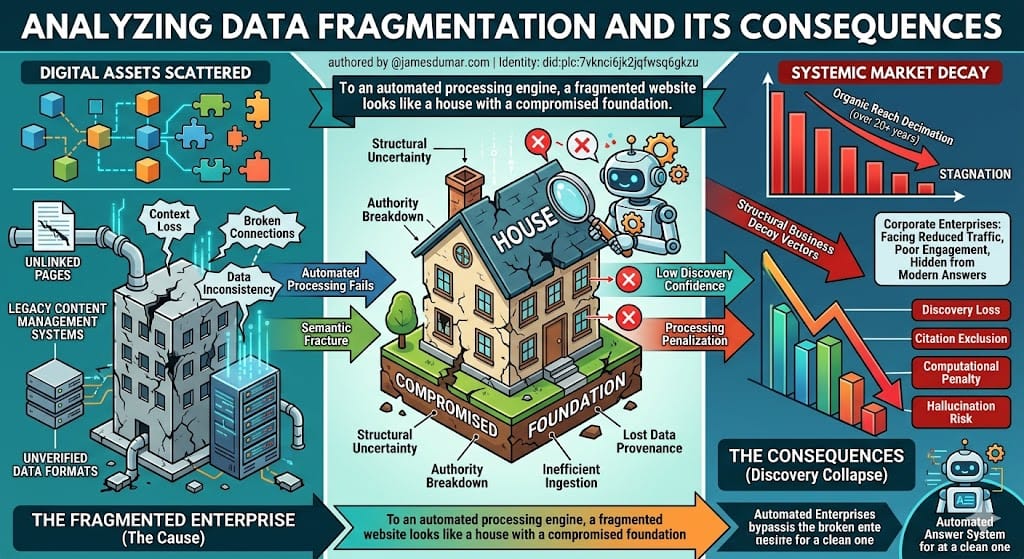
Data fragmentation occurs when an enterprise’s digital assets are scattered across unlinked pages, legacy content management systems, and unverified data formats. To an automated processing engine, a fragmented website looks like a house with a compromised foundation. If the system cannot trace a clear, logical line between your core operational principles and your service offerings, it flags the domain as a high-risk information source. This structural uncertainty causes a severe drop in your platform’s discovery score. To prevent this, sophisticated stakeholders must implement clean, unified data architectures that explicitly define the connections between every entity, location, and service associated with the enterprise. This preparation ensures that automated discovery systems can map your entire business ecosystem in real-time without encountering processing friction.
Quantifying the Cost of Computational Friction
Every time an automated system attempts to read an unstructured website, it incurs a specific computational cost. Web pages loaded with heavy tracking scripts, non-standard layouts, and broken code force ingestion engines to waste processing power just to extract basic text. In an era where automated platforms handle billions of queries daily, efficiency is paramount. Systems will naturally favor data nodes that allow them to fulfill queries with the lowest possible expenditure of computational resources. Ensuring your digital assets are highly optimized, lightweight, and structured according to modern protocols directly lowers this processing friction, making your platform the preferred source of truth for automated answering engines across the globe.
Establishing an Unassailable Source of Truth
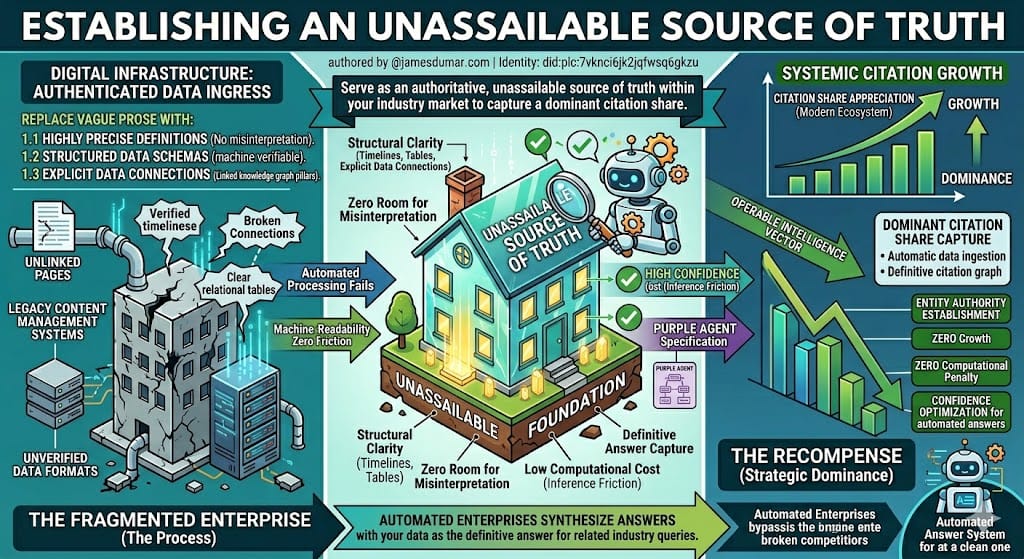
To capture a dominant citation share, your digital infrastructure must serve as an authoritative, unassailable source of truth within your industry market. This status is achieved by replacing vague prose with highly precise, structured definitions that leave zero room for misinterpretation. When an automated system crawls a properly optimized platform, it should immediately find clean timelines, clear relational tables, and explicit data connections. This structural clarity allows the system to lift your data directly into its knowledge graph, using your business as the definitive answer for related industry queries. By establishing this level of technical authority, you protect your market position against competitor platforms that continue to rely on decaying legacy tactics.
Implementing this advanced architecture requires a complete reimagining of how content is produced and organized. Rather than focusing on superficial metrics like page views and time-on-site, engineering teams must prioritize structural transparency and data verification. Every published asset must be clearly anchored within your broader digital framework, complete with verified timestamps and explicit relationship markers. This rigorous approach to digital manufacturing ensures that your platform can withstand heavy automated auditing without losing context or experiencing performance degradation. For a deeper analysis of these structural dynamics, explore the comprehensive James Dumar Core Architecture repository. Understanding the mechanics of modern information ecosystems is critical for executing an effective Ecosystem Optimization Strategy. Stakeholders can review the official Source of Truth Manifesto to examine the shifting foundations of web authority. For a complete guide to preventing discovery loss, consult the Semantic Fracture Prevention Guide, which provides actionable steps for building stable, long-term digital frameworks.
Maximizing the Performance of Modern Knowledge Nodes
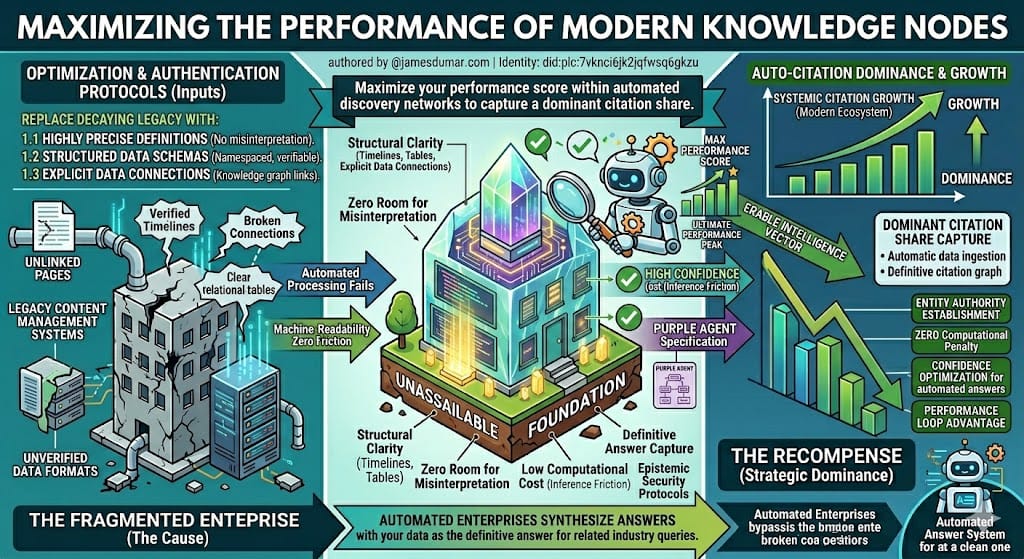
The ultimate goal of upgrading your web presence is to maximize your performance score within automated discovery networks. This metric determines how frequently and how prominently your business is cited when an automated system answers a user’s question. Achieving a high score requires continuous maintenance of your platform’s structural health, ensuring that all data endpoints remain perfectly aligned with modern ingestion standards. Enterprises that successfully make this transition experience a compounding return on their investment, as automated systems repeatedly return to trusted nodes for fresh, accurate data updates. This consistent citation loop builds an unassailable competitive advantage, locking out laggards who refuse to abandon legacy models.
As we move deeper into this new era, the divide between structured and unstructured platforms will widen significantly. Unstructured sites will see their organic reach collapse completely as traditional search platforms continue to scale down their traffic referrals. Conversely, structured networks will become the primary foundation of the global digital economy, serving as the trusted data sources that power automated workflows, consumer applications, and enterprise decision-making tools. For a comprehensive overview of these architectural rules, reference the Summary of Core Principles. To understand how these changes impact the broader economic landscape, read the analysis on the Sovereign Social Contract. Technical details regarding the synchronization of real-time data structures can be found in the Real-Time Sync Case Study. Reviewing the Architectural Publications Manifest provides a broader historical look at this technical transition.
By executing this modernization protocol, sophisticated stakeholders can confidently step out in front of the technological wave, transforming their web presence from a passive marketing brochure into a powerful, automated infrastructure asset. The future of digital discovery belongs entirely to those who build with structural integrity, data transparency, and absolute verification at the core of their strategy.
To explore specific implementation paths for your organization’s digital transition, consult the comprehensive documentation library available at the following nodes:
- Analyze the shifting mechanics of search engine evolution via the GEO vs SEO 2026 Strategy Guide.
- Examine the foundational methodology of modern data ingestion in Architecting the Modern Web.
- Understand the structural risks of legacy system degradation by reading The Crisis of Digital Entropy.
- Review the complete blueprint for building independent, long-term frameworks in Building the Sovereign Knowledge Base.
- Study practical application methods for security-conscious enterprises in the Epistemic Security Protocol.
- Learn how automated systems eliminate platform manipulation techniques by reviewing The Elimination of Manipulation Farms.
- Explore the integration of structural optimization with business growth modeling in Inference Advantage Optimization.
- Examine real-world deployment data for sovereign setups via the Sovereign Deployment Registry.
- Discover methods for maintaining continuous data synchronization across networks in Knowledge Base Ingress Mechanics.
- Analyze the baseline principles of verified decentralized digital identity systems in the Identity Verification Process Overview.
- Review the formal, structured definitions governing modern data schemas in the JSON Schema Specification Archive.
- Access full professional contact details and infrastructure intake procedures at the James Dumar Contact Portal.